Requirements for filters used in Flexit ventilation units
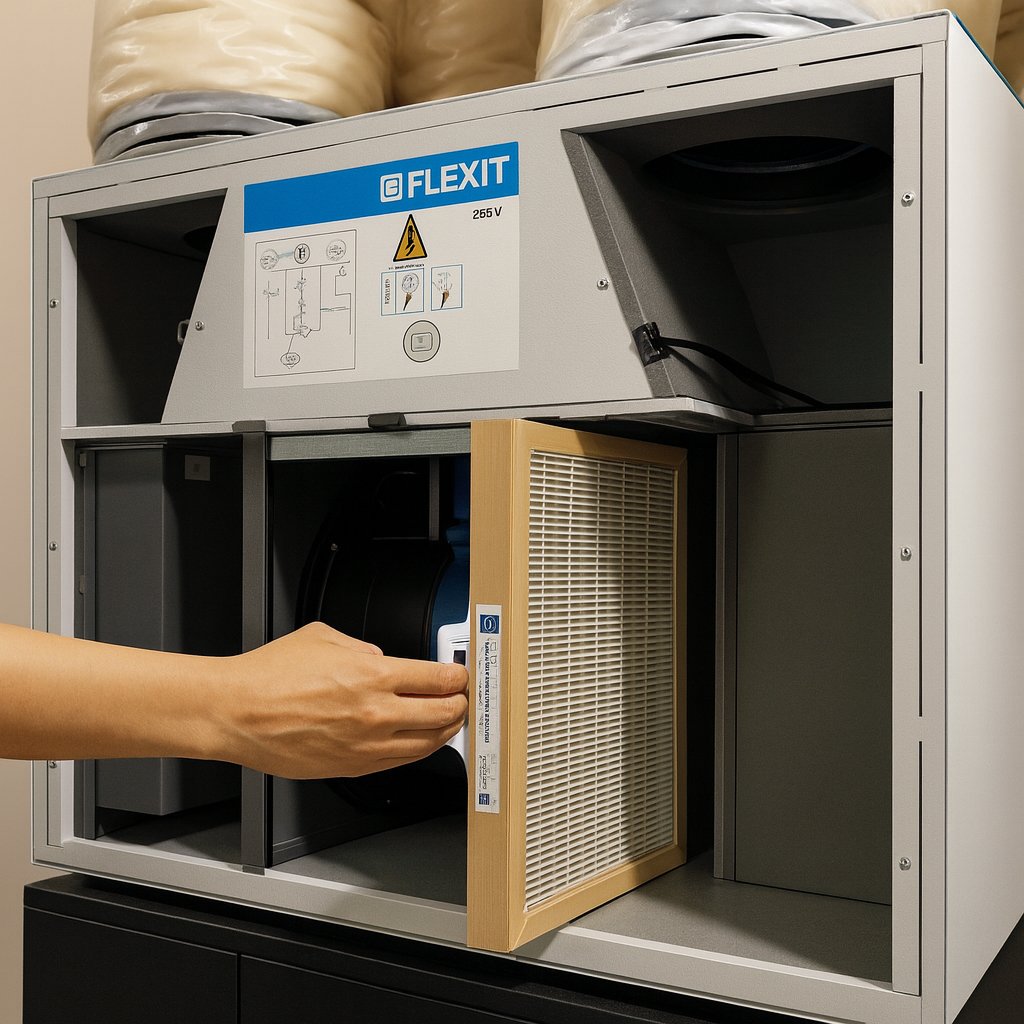
Flexit air handling units provide homes with fresh, filtered and tempered air. Filters play a crucial role in preserving air quality and protecting us from dust, pollution and pollen. Between 1.5 and 2 million cubic metres of air pass through the filter each year, which directly affects the health of those living in the home. To ensure an optimal indoor climate, you must choose high-quality filters.
The importance of filters in ventilation systems
Filters play a crucial role in ventilation systems. Here are some important considerations:
- Air quality: Filters affects the air we breathe. They remove particles and provides better indoor air quality.
- Energy consumption: Proper filters contributes to lower energy consumption and optimal operation.
- Energy labelling: The product must meet energy efficiency standards to be legal. Incorrect filters may violate labelling requirements according to ecodesign requirements, Eurovent and energy labelling rules.
- Service life: Proper filters helps the system to last as long as possible, making it both sustainable and environmentally friendly, preserving the value of the home.
- Warranty: Using incorrect filters will affect warranty claims and lead to problems.
Responsibility for choosing the right filter
As the homeowner and system owner, you are responsible for choosing the right filter. Flexit warns against blindly trusting standard recommendations from filter manufacturers. Our experience shows that this does not always ensure the desired performance. To ensure an optimal indoor climate, you must choose high-quality filters.
- Filter class: The filter must meet the ePM1 50–85% standard for both supply and exhaust air. The supplier must document this through accredited laboratory tests.
- Service life: The filter must maintain this class throughout its service life, typically six months but in some cases 12 months. The performance of only one new filter alone is not sufficient documentation.
- Quality assurance: The manufacturer must regularly test production to ensure consistent quality. The filter must be tested in Flexit units. Annual documentation of testing procedures and outcomes is also a requirement.
*Read more about why it is required that the filter you use is tested and adapted to the current ventilation unit. - Pressure drop: To ensure proper function, the filter’s pressure drop must be tested and documented in approved laboratories.
- Fit and seal: The filter’s fit and sealing around the filter must be tested and documented. There should be no air leakage passing around the filters.
- Eurovent certification: Note that general Eurovent certification is not sufficient documentation, as results may vary in residential air handling units.
Known issues with incorrect filter use and warranty claims
Using filters that do not meet the requirements may result in warranty claims being rejected. Many problems can be traced back to such filters. Users are responsible for the consequences of using the wrong filter quality.
Typical problems with poor filters:
- Air quality and health: The air quality you breathe in the home is crucial. In urban areas, traffic pollution is a problem. The pollen season can also affect indoor climate. That’s why it is important to choose a filter that meets health requirements.
- Filter quality over time: Some filters lose quality quickly, especially if they are made of cheap or inadequate materials. This can lead to increased energy consumption and damage to the air handling unit.
- Pressure drop and fans: Poor filters clog quickly and result in a higher pressure drop. This can increase energy consumption and damage fans and heat exchangers. Poor filters can cause imbalance in the system, leading to moisture problems with condensation and moisture damage in the home.
Remember that Flexit requires documentation of original Flexit filter usage for warranty claims. To ensure a healthier indoor climate, Flexit original high-quality filters must be chosen.
*Why it is required that the filter you use is tested and adapted to the current ventilation unit
Different filters with apparently the same degree of filtration and which look the same can have very different pressure drops and lifetimes in a residential air handling unit. The reason is that a residential air handling unit has relatively small physical dimensions, which means that velocity profiles and air flows differ significantly from a real situation compared to a schematic set-up in a laboratory. To demonstrate this, the filter must be tested in a real situation in the relevant ventilation unit and not in an idealized laboratory setup.
In all units that are developed, many different filter designs are tested to find the right and lowest possible pressure drop that simultaneously provides the right degree of filtration and service life. This is an extensive work.
It is very important that the filter used in the unit corresponds to the pressure drops and thus the service life for which the unit is designed for the following reasons:
- It ensures correct air volumes that are projected and regulated so that a good indoor climate is maintained.
- It ensures low energy consumption and no unnecessary power consumption for fans that have to work against the wrong pressure.
- It protects against imbalances that can cause moisture problems in buildings or units, increased energy use in the case of unbalanced recycling and a series of subsequent problems and damages as a direct consequence of this.
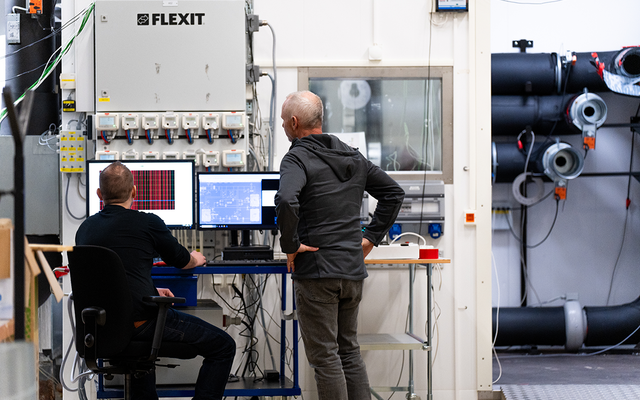
Problems related to this have been discovered both in the field and in Flexit's own measurements in the laboratory. As a result, Flexit therefore warns against using filters that have not been tested in the ventilation unit, as this can lead to damage to both the ventilation system and the building, which is not covered by the warranty conditions.
Link to Flexit standard warranty conditions